For marketers, what is this matrix? In the movie, The Matrix, it was a rebellion against machines. In the instances laid out here, it’s about 21st century business communications between your stakeholders (customers) and your organization. Whether you are a service company, retailer or a brand, today’s customer demands more from you than in the past.
Here is where all your multi-channel marketing all blends together into an enticing and successful customer journey. This engagement matrix will be online or offline. In any strategy like this it’s important to connect with your customer in a positive, personalized manner. Although this is not customarily a part of traditional marketing methods, even the user experience on your website is a part of it. People no longer tolerate hard-to-navigate websites, they just move on to the competitor’s seamless digital experience.
If there's one question that I consistently get from friends and online acquaintances, it is one for advice on writing a book. It seems that everyone wants to write a book. People write books for different reasons. I think I was born wanting to write a book, I majored in English Literature for that reason. For other reasons, I ended up in marketing, but the need to write a book - to help people - never went away. The most common reasons I hear from people are:
Establish themselves as an expert in their field (does that really work?)
Get more speaking engagements
Satisfy a heartfelt need
Fulfill their ego to be a "published" author
Writing and selling my books is my main job (along with constantly researching my topics), it comes before everything else, even social media and speaking. I have been writing books since 1998 and sold a million by 2007. I don't count the numbers anymore, what counts to me is hearing from my readers. I am lucky to have been writing long enough to see the impact my books have made on my reader's lives.
Wanting to write a book and actually finishing the project are two vastly different things - just ask anyone who has written one. You also need to know, writing books are not for everyone. "Long form" content takes on a completely new meaning when you're expected to write not just 1,500 words - but over 300 pages on a topic.
Even in today’s era of social media, the number one marketing channel for new leads and customers is word of mouth. In essence this means that you need to have people talking about your company. When the world is talking; people are listening. According to Nielsen and Pew Internet, "Only 15% of people trust messages received directly from businesses compared to the 70% who trust messages received from personal contacts."
If we extend the personal WOM channel to social media, the amplitude of your message in a noisy world is magnified. It’s no longer a one-to-one conversation, but possibly one voice to tens-of-thousands. There’s a good chance your customers are on one of the major networks. As a matter of fact, the people you want to reach demographically (whether you are B2B or B2C) are participating right now. Businesses and customers are reading messages on social media and you can’t watch a TV show without seeing a brand hashtag to follow.
Know that the days are gone where you as a brand can control your message, but you can intensify it.
Your customers and investors are talking about you online so why not join the conversation. If enough voices are speaking positively about your brand, there’s a strong chance your market share will raise. No matter the size of your business; you can achieve a successful outreach and employee advocacy can be the key to get you started.
According to a recent Inc article, employees have the most credible voices in the organization, so why not power them with the right tools?
At Pitney Bowes for example, their employee advocacy program “The Insiders” has seen great success in only a few months. With over 200 employees already part of the program, this new approach to building more socially savvy employees and bigger WOM is catching up quickly.
The program has already been expanded to the UK, with plans of additional expansions before the end of the year. Not only were The Insiders a big part of the new Pitney Bowes brand launch back in January, but they have been key to sharing the #NewPitneyBowes story.
“The Insiders initiative is an excellent opportunity to get employees engaged in social media, while spreading the word about the new Pitney Bowes and building our collective thought leadership in the marketplace." - Jason Bartlett, Vice President, Digital Marketing & eCommerce
At Pitney Bowes, the employee ambassador program is more than just a communications tool. It is also helping the company with the bottom line, creating sales opportunities, as they go. From building brand awareness and improving company culture, employee advocacy has also been proved to have a significant impact on revenue.
Bruce Gresham, VP Business Planning & Strategy had an amazing success story, clearly proving the ROI of the program.
“I shared one of our new product innovations on LinkedIn, and several of my existing connections ‘liked’ the post. One of the ‘likes’ lead to a person outside my network ‘liking’ the information (in the post) as well. This developed into a sales opportunity of significant worth with a client with whom we normally would not have connected.”
Your employees are the face of your company. They can also be valuable promoters for your message, why not try a new way of return on human investment? Need additional WOM? Your employees are first in line to help, just ask them.
FTC disclosure: This is a sponsored post. I only work with and showcase products, events and/or companies I believe my readers will benefit from. Pitney Bowes has hired me as a brand ambassador. I am not formally employed by Pitney Bowes. All thoughts and viewpoints are mine. This is disclosed in accordance with the Federal Trade Commission’s 16 CFR, Part 255: Guides Concerning the Use of Endorsements and Testimonials in Advertising.
I've been at this "work from home" thing longer than most. Before I started my online career of writing books and speaking, I ran my own marketing agency for close to 15 years as a single mom. I converted my two-car garage into a dropped-ceiling office with extra electricity, computers, phones and desks.
Back in those days, it wasn't common at all for people to have “home offices.” You had to have an office in a building or storefront and if you weren’t in a proper office, very few would take your enterprise seriously.
One of our clients was the United States Air Force, we had a contract designing magazines (Flying Safety, Road and Rec and the TIG Brief). Before I began that year long project, they sent someone from the Inspector General’s office to check us out and be sure we were a “real” business — because certainly no one could run a business from a garage, right?
I ran my business then as I do now, showing up at my desk every morning (after I took my daughter to school) and locking the office at night. Just as I did when I worked in a corporate environment.
The business was incredibly successful due to the fact that I put every ounce of energy I had (outside of Mom duties) into it. I was successful enough to give it all up to start writing and speaking when offered the opportunity. I learned some hard lessons along the way. The key to success is developing positive work habits.
Develop routines that work. Life, clients and family all have ways of grabbing your attention, pulling you off task. It may seem inevitable, but it’s not. Take steps to set a schedule. Involve your family too; be clear that the time you’re work hours need to be sacrosanct. By setting (at the very least) some loose schedules; you will feel more in control and laser focused.
Organize your day the night before. Envision how your next work day will function. Lay it all out in your mind or in Evernote without overloading the “to-do” list. I keep a Notepad window on my desktop with notes from the night before and I add to it during the day. Set long range goals during quiet time; take action on them during business hours.
Don’t let email run your life! Have set times in the day when you address your primary mail box. Use filters to segregate the fun stuff. The fun email can be dealt with at the end of the day on your tablet.
Schedule your Social Mediatime and set controls for notifications. Your concentration won’t be worth spit if you keep hearing pings or getting random texts and calls. If you have a Google Voice number, forward your phones to that number and read the transcriptions of messages when you are ready. Return calls when its not crunch time.
Find apps that save you time. Technology saves you time, so why not use apps? I mentioned Evernote above — great one! It helps me organize my thoughts whether I’m at my desk or in line at the market. Consider also Bufferapp to schedule social media posts for sharing and set up PayPal so you can take credit cards (their reports are second to none). Also, using Skype saves you time on quick calls.
Outsource once you can afford it. The entire purpose of your business is to make enough money to keep you and your family comfortable. Expect to do a whole lot of unsexy chores. As soon as you can afford it, the best investment will be someone to do your bookkeeping.
Start with these six routines and they will soon become habits. Positive habits become part of your life and become the difference between winning and failing.
When I first started my mentorship with Pitney Bowes Smallbiz Mentorship Contest winner Julie Wiley, I knew it would be a challenge. Here was a woman with years of entrepreneurial experience moving from a full-time job to a home-based, online business.
Julie had been profitably selling on eBay since 2002 on the side, so a jump to a full ecommerce business was not a big stretch. When deciding about her business plan in 2008, she wanted to select a theme that was fairly recession proof. She reasoned that people were always getting married so she named her eBay store I Do Bridal and Gifts.
She also wanted her business to be unique in the marketplace so she widened her product offerings. Tapping her creative side, she began making varied custom items – such as canvas wall décor, glassware and creative bachelorette favors. These items not only build her bottom line, but require less inventory investment. Smart move.
Thinking further into the bridal idea, Julie came upon the thought that remarriage is almost as popular as first-time marriages, so she felt that second-time brides might enjoy a place of their own. She named her new website Second I Do’s. Despite doing all that seemed right, she was struggling to turn a profit.
We dug in, and together we addressed many of the issues that face small businesses. Here’s what we changed:
Mobile–izing the Website. The first thing I did was to check the Second I Do’s website. Although it was chock full of great merchandise, the layout was dated. Although the host told Julie her site was optimized for mobile. It clearly was not. We negotiated for a new template, but the template that was offered up was incredibly basic (but could be seen on mobile). After checking the latest from different providers, we selected a professional Shopify ecommerce website which offered contemporary templates and excellent mobile conversion. This also cut down Julie’s monthly expenses. The new version of the SecondIDos.com website will be live on Shopify by December 1st.
Getting Centered. They are numerous popular ecommerce portals and Julie was trying hard to do a good job on many of them. It’s a lot of work to keep up to date on changes and relisting and listing the same merchandise on many sites. We looked at her monthly sales on each platform and evaluated the ROI. We narrowed her alternative selling platforms to the ones which performed best: eBay, Etsy and Artfire.
Sharpening Keywords and SEO. When you have a lot of merchandise up for sale online, the mere act of listing many items makes it easy to let item titles get stale. I went over about a hundred of Julie’s eBay items and made suggestions on new titles based on keywords. In ecommerce, keywords are king. They are the SEO for your items for sale. I recommended she be sure to use words that fully describe the items and fill the entire permissible title space. We also went through and freshened up listing descriptions to answer any question a prospective customer might have.
We visited Google Analytics and checked visits, time on site, average pages viewed and bounce rates (how many people leave your site without visiting other pages). We discussed the factors that needed to be improved. Moving her main site to Shopify, with its open layout, should handily increase sales.
Cash Flow. Many ecommerce businesses get weighed down in inventory. Unless the inventory is evergreen (and fashion rarely is), it’s time to slash prices and move merchandise. We also looked at monthly costs related to websites, subscriptions and payment providers and compared these to current options. We managed to pare down her monthly output significantly by using many of the lower priced and often free services.
For example, there was a paid store app on the Second I Do’s Facebook page, so we switched from that to Auction Items from eSoftie, a free solution that allowed Julie to send her eBay items to a Facebook store. Setup was simple and took only a few minutes for the entire inventory to populate.
Social Media Marketing. We went over the best practices that I lay out in my book Social Media Commerce For Dummiesand gave her tips on how to better engage and build a community of customers.
Julie had a nominal presence on most of the social sites. Since social media seems to be everywhere these days, we examined the demographics and decided in which sites Julie would put the most effort – and agreed to focus only on those. We also set up Google Alerts so she could monitor mentions of her brand and industry on the web and take best advantage of sales opportunities (as well as to derive content for sharing).
Setting up a social media plan can take a while and generally done after the ecommerce platforms are mostly complete. So it might be a while before Julie’s Twitter feed ramps up. I suggested Julie use Buffer to better organize the timing, so as not to send out tweets and posts in rapid fire fashion, leaving room for responding and connecting.
In the three months I worked with Julie, we covered more than I can possibly list here (I can’t give away all her secrets)! In doing so, I was reminded that mentoring is a two-way street; a partnership. When mentoring, you always gain a new point of view on many things. A recent post of Julie’s on Facebook signaled to me that we’d been successful:
“I have never been so busy working from home. Part of it is due to my mentor, Marsha Collier who has given me many “tools” I can use to become a better ecommerce business. Unfortunately, with the new tools comes time spent learning and utilizing them and when you are trying to sell to generate income, it can seem like these tools take away from your selling. I am learning that in order to be successful at selling, I need to have the proper foundation laid. Thanks, Marsha. I know next year my business will be positioned so much better for success!”
Thank you Julie. It was a great experience for me as well!
Brands often have a difficult time, especially when handling hundreds of thousands of customers a day (even if only a small percent is on social media). Their social media teams have to straddle a very thin line between marketing and engagement.
Take the @AmericanAir account on Twitter. It can't possibly be easy to act fun, friendly (and civil) while unavoidable delays leave customers stranded and then fling a stream of abusive obscenities at the brand?
I've been watching the last hour of their stream. American Airlines has handled Tweets from customers uncomfortable in their seats, upset about having to check a bag gateside, a plane being too warm, a worn out traveler complaining about the amount of people in the Admirals Club and an Executive Platinum flyer thrilled with his upgrade.
Anyone remember the days when there was no one with whom to vent? When you just wanted to scream at the top of your lungs? Now at least there is someone listening to your pleas for service, and they are also answering.
Aside from handling cranky travelers, they partake in conversations, share information, fun facts, promotions and incredible photos 24/7. They have a target response time to comments of 15 minutes. They seem to be doing this all very right, because according to a report from Sprinklr, American is the world's most social airline; "American is not just relying on its large audience, but is also producing content that effectively triggers a consumer response."
Their social media specialists tweet from the AA #TweetSuite and respond over 1000 times a day. They are a tight knit group of employees devoted to customer care. Unlike other brands, American has chosen not to have each team member include their names in the company Tweets. The preference is that the airline speaks in one brand tone of voice. They train their members for consistency.
I personally think the Twitter team is #AAwesome. They once helped me out when I was making a connection and accidentally walked out of security. They've also kept me company with funny tweets
So when I got an email from American saying they would like to interview me as a featured AAdvantage Member in the August 2014 "American Way" Magazine, I was (admittedly) over the moon. I responded right away - and was sworn to secrecy!
I wasn't allowed to talk about it online, even with my Twitter friends or @AmericanAir. This was tough because (as I said in the article) I love tweeting with the crew when I'm flying (although I am convinced that someone from the social media account suggested me for the piece).
Thank you to everyone who is posting picures of the article on Facebook and Twitter and tagging me. It's so much fun to meet you and see when you travel. (I haven't actually seen a hard copy of the magazine yet). If you'd like to see the article, it can be found online at the American Way emagazine here on page 94 or to see a magnified version, please visit this page.
Since we can't mention names, on the top of this article is a photo of my favorite team of Twitterati — #winning!
Well designed quizzes are a go-to quick take on almost any topic. I came across the quiz below: "What is Your Social Media Type" designed by Kevan Lee, Content Crafter at the buffer blog.
Take this quiz and you'll have a better idea if you are on social media to express - or to impress. It will give you a clear picture of your type; hence the kind of audience you attract. The data behind the quiz comes from a Wharton School study by management professor Nancy Rothbard and colleagues. Their study, 'When Worlds Collide in Cyberspace: How Boundary Work in Online Social Networks Impacts Professional Relationships, looked at the different strategies people use to manage their social media communications, and how varied approaches impact their outreach to an "invisible audience."
The portion of the study's title, "When Worlds Collide", refers to work and life balance; hoping to answer the question of how on-line social media impacts our lives. They also use the word minefield. to represent the challenges as to how we manage these relationships:
“We have both a new world opening up where social media has so many amazing opportunities to connect … but it also poses challenges as we think about how to manage the relationships we have.”
They identified four strategies that people use and different types of social media personalities.
Open Sharer: Is willing to connect with anyone and willing to post and share anything
Audience Sharer: Carefully chooses the audience they connect with and are therefore still willing to share openly and authentically
Content Strategist: Eager to connect with anyone and picky about the content that they share
Custom Strategist: Separates their audiences to create custom silos of sharing
Twitter can be a daunting platform for the beginner. I know that the first thing you want to do is build your audience size and you'd like to get people to follow you. This can be accomplished (it can't be done overnight - sorry) and in this post I give you simple tools to build a great reputation and a stellar community.
Follow people and make connections
Start first with selecting keywords that describe your interests and your business. Then use them to find people to follow. When you find interesting people, follow them and pursue an alliance.
Search for people on directories by topic at Tweetfind, and Followerwonk where you can search Twitter bios for keywords. Enter your favorite topics and find others in WeFollow. Twitter search is also a good tool. I'd use each tool.
Look for Hashtags(the # symbol used to mark keywords or topics in a Tweet) on Twitter that relate to your business. You can also click on a hashtag that you see on Twitter (or a trending topic) to see who is talking about it.
Find twitter lists from influencers. You'll find people who have hundreds, thousands (in some cases hundreds of thousands) of followers. To organize large amounts of people, pros curate Twitter Lists (which can be private or public). To find people in a specific niche, go to a profile page and click the down arrow next to the word More. You will find a link for public lists that the user has created (and has subscribed to) as well as lists on which other people have listed them. This is a great resource to find like-minded Twitter members. For example, Margie Clayman (Director of Marketing at Clayman & Associates in Ohio) has a list of her Top 100 on Twitter. I have a short one on eBay sellers.
Embrace #FollowFriday. On Fridays you will see hashtagged Tweets with #FF or #FollowFriday. Click on the names in the Tweet and read the person's bio, if you like what you see, you've found somebody new to follow. Be sure to say hello too.
Once you follow someone? Don't immediately Tweet or send them a Direct message requesting a favor or to follow you elsewhere. Get to know them first. Start a conversation! Most importantly, don't un-follow them because they don't follow you back immediately. Follower churning tells everyone that you're not interested in engagement and that you're just trying to build numbers.
A common topic for discussion is promotion for small businesses and personal brands. When it comes to social media, the responsibility for promotion falls on the shoulders of the owner (chief cook and bottle washer). Even though my books are published by one of the top 10 publishers in the world, I still need to take responsibility for my own brand.
I’ve personally been promoting my work and books in the real world and online for over 15 years and it’s the most difficult task on my plate. Even on the “About” pages of my websites, I am loathe to blow my own horn. I might consider myself an introvert, or I might just feel the mere act is bragging. To be fair to those who do it well, it takes nerve to think there are thousands of people waiting around to hang on to your latest words or hot new project. We may have products, businesses or books to promote, but not everyone has a similar promotional style.
In a huge innovation, today Amazon unveiled #AmazonCart. When you see an item posted on Twitter with the hashtag #AmazonCart, you can just click the link and the item will be placed in your Amazon Shopping cart for your purchase at a later time.
The +Shorty Awardsare like the Oscars/Emmys/Grammys for social media and I am proud to have been nominated in the #BizAuthor category. It means so much to me that people care what I have to say.
"Influence is only the passing of enthusiasm. I hope that you know how enthusiastic I am about what I do."
There are two winners in each category. One for the highest popular votes and one judged by the #ShortyAwards academy. Voting ends on Tuesday and must be placed with specific verbiage shown on the site.
If you have a Twitter account, I'd be honored to have your support. Please go to http://shortyawards.com/MarshaCollier and vote in the #BizAuthor. Thank you so much - have a great day!
You have a business. You're engaging on Social media. So what next? In light of the many social PR fails, consider a policy for your employees.
If you intend to promote your brand and interact with customers through social networks and social media channels – and I highly recommend that you do – you must realize your employees will be there as well, with their own personal accounts. There’s no reason not to encourage your employees to explore and engage in social media communities online, but remember, they are also the face of your company to all their friends and associates – as well as to the customers they know. What they say online or the type of photos they post on their personal accounts may reflect, albeit in a roundabout way, on your business. When they directly talk about you or your business, it will have a cause and effect relationship.
It is your job to guide your business’s online culture and protect your brand’s online persona. Provide guidelines for your employees in the form of a Social Media Policy. This written document, similar to other codes of conduct you have for employees, will let them know what type of behavior you expect from them online and any limits as to what business-related information they can share in the public stream.
Here’s how one of our nation’s biggest companies handled it. Back in 2009, before most people thought about setting guidelines, Adam Brown broke ground by developing a 4R social strategy (review, respond, record, redirect) and spearheaded the development of social media guidelines for the Coca-Cola Company. Aside from designating a code of conduct for their official online spokespeople, Coca-Cola also laid out specific principles for their associates. By taking a look at what Coca Cola deemed appropriate, perhaps it will help you forge a set of standards for your own employees. From Coca-Cola’s Online Social Media Principles, the guidelines below with my explanations outline expectations for any online activities – personal or professional – where employees reference the company or have made their association with the company known.
1.“Adhere to the Code of Business Conduct and other applicable policies” – Coca Cola has several policies regarding specific business activities, including general conduct, information protection and insider trading. All employees (from the CEO to interns) are expected to follow these when mentioning online that they are employees of Coca Cola.
2.“You are responsible for your actions” – This point is a reminder to exercise sound judgment and common sense when posting online because employees will be held responsible if their actions negatively impact the business or its image.
3.“Be a ‘scout’ for compliments and criticism” – This guideline acknowledges that employees are “vital assets for monitoring the social media landscape.” Coca-Cola even supplies an in-house email for forwarding both positive and negative comments employees observe online, so they can feel confident negative situations will be addressed without feeling like they must be the one to take action.
4.“Let the subject matter experts respond to negative posts” – This point stresses, again, that should employees encounter a potentially damaging post about the business, the post should be referred to those trained and approved as official online spokespeople to handle responding.
5.“Be conscious when mixing your business and personal lives” – This principle recognizes that personal and business personas often intersect online and reminds employees that everything that is posted online – even when channels or profiles are “private” or “protected” – can still ultimately be seen by anyone at any time
Book reviews can add great content to share in social media and your blog, especially when the books are written on a topic that relates to your customers. But after many years online, I can testify that reviews written without thought can be boring. Don't write a "book report." Let your readers know why the contents of the book resonated with you and how it can help them.
As an online writer -which YOU are- it's your duty to develop content that attracts people and make them want to share. A short (emphasis on the word short) video review can tell a story and be fun to watch. Check the example below posted by +John Lawson for my newly published eBay Business All-in-One For Dummies which he posted yesterday during his Google Hangout. It's a fun take on a serious title.
I hope, if you took the 3 minutes to watch the review, you might want to click the link above and buy my book. Its for any eBay seller, or e-Commerce business who wants to ramp up to professional grade. I'm sure it will give you enough tips to justify the purchase.
If your online goal is to
conclude a sale to (or build your brand) with your social media friends and fans, you’ll have to
give these folks a cold, hard look. Some believe that more is better.
But more what? You need to focus on people who, at the end of the day,
may purchase something from you directly or through your website.
Facebook Insights, Google Analytics, and
other tools will help you decide if you’re playing in the right
ballpark. If your message isn’t being received by the right people,
you’re wasting time and money in social media.
Believe it or not, emoticons (or Smileys) have been in use since the
19th century to punctuate written words with graphics simulated by
characters. An historical newspaper specialist found what appears to be a sideways winking smiley face embedded in The New York Times copy of an Abraham Lincoln speech written in 1862 "(applause and laughter ;)";. There is some debate as to whether it is a typo, a legitimate punctuation construct, or an emoticon.
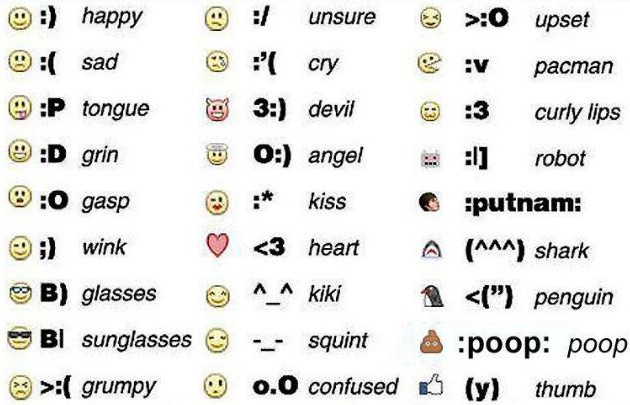
Facebook gives you options to adding your mood (or activity) – to your
own posts – or to comments you write on your friend’s content. Below are keystrokes you can use to form emoji, and further on I show you how to use Facebook's new mood and activities emoticons within your own posts
When you’re commenting, or in chat, you can type in these characters to add punch to your words:
Posterous, was acquired by Twitter a while ago and Twitter decided to shut Posterous down as of April 30.
Everyone with a blog on Posterous has to move it to another platform. I imagine most people with a Posterous blog moved their stuff to another platform a while ago, but I'm one of those "last minute" kind of people.
Unfortunately I won't be able to take my current subscriber list with me, so if you want to stay in the loop and continue to get interesting content about how to maximize your online endeavors, please consider subscribing to my main blog, Marsha Collier's Musings, online since 2004. It will incorporate the Posterous posts, as well as future ...um ...musings.
In a few weeks, the blog will be incorporated into the latest iteration of Cool eBay Tools. A site a I founded in 1999, which now includes articles tools and tip that encompass eCommerce, Social Media, Customer Service ...and of course, succeeding on eBay.
Thank you all for tuning into my Posterous blog over the last two years. See you on the other, brand spanking new side!
Our panel: Bianca Buckridee (JP Morgan Chase), Brooks E Thomas (Southwest Air), Carla Saavedra (Samsung Mobile US) and I at addressed 500 social media, brands and customer service enthusiasts.
The crowd responded with a ton of Tweets including comments, quotes and links that carried actionable insights. Before I post the deck online, I thought I'd share this valuable collection
So I'm clearing out my email before I go to sleep. Decide to clean out a mailbox that's pretty much dead - left over from my old marketing agency days. To my surprise, I see an email from eBay requesting that I pay for an item I supposedly purchased on the site.
I had to shake my head, as I knew I hadn't used this email address in years. I examined the email. In the area where eBay would insert the User ID of the buyer, was a series of numbers. Hmmm, strange ID. I try to check out the headers to see if the email came from eBay. This is close to impossible to do on the phone, so I examined the links - and indeed the email did seem authentic.
Within a few hours, an invoice was sent to the same email address, addressed "Dear 2679302013" with my name appearing at the top of the email.
It's after midnight, so I took to my laptop to research further. I perform an eBay bidder search by going to eBay's advanced search:
I find that this user ID made one purchase (the one I was invoiced for), but the purchase was made while I was on my radio show. I clearly couldn't have made this purchase. The User ID also showed eBay's new user icon with 0 feedback. By clicking on a user's feedback number, you can find out when the user first signed up for eBay. Clicking through I find that they signed up for eBay on a Saturday as well. Hmmm. I usually don't sign up for new accounts when I am on the air.
I went to eBay - and clicked the Customer Service link, hoping to send them an email alerting them of the impersonation. I was amazed to find that eBay's customer service takes phone calls 24 hours a day, 7 days a week. It was after 1 am at this point, but I figured, why not give it a shot.
The customer service representative (working from eBay's Salt Lake City hub) answered the call and listened to my tale of woe. I had forgtten several things:
eBay keeps all the data user's input when you sign up for an account
IP addresses are attached to transactions
eBay sends out an email upon opening an account
"Charm", the CSR sent an email to the registered email address with a code to confirm that I was indeed the owner of the address. I read her back the code from the email and she said that eBay would remove the email address from the account. What bother's me is that the account is still for Marsha Collier, and is still an active account on the eBay site.
Lesson learned? If you have old email accounts, be sure to check them regularly. If I would have followed my own advice, I might have noticed the initial registration email that came from eBay (sent 2 days after the user registered the bogus account) welcoming me to the site. I sincerely wonder why eBay no longer requires an email address confirmation from those who open an account. If they'd have, the user would not have been able to make a fraudulent purchase - as I'd not confirmed the authenticity of the address.
I recommend in my books to let brands know when they have done something right; when you are pleased with their service. (They must get so sick of social media complaints, that a compliment usually brightens their day, and the reply with a "thank you." So next morning, I used Twitter to thank @eBay (and @AskeBay) for their CSR's excellent service. All I got back was the sound of crickets - no response.
The world’s largest social network making waves with launch of a new tool called Graph Search.
The tool essentially allows people to discover information based on data that Facebook has collected from its users over time. For example, someone could use Graph Search to discover information such as “restaurants in Chicago that my friends like” or “photos of me that I liked.”
While Graph Search is currently in a limited beta release, the tool seems to improve the social network’s lackluster search bar, which previously only allowed users to search for people or pages on the social network. Moreover, Graph Search has the potential to impact businesses on Facebook. Discover five things you should know about Graph Search below:
1. Likes Matter
Facebook Likes are now more important than ever, especially for businesses. According to a Facebook blog post, Graph Search can make it easier for people to discover and learn more about businesses on Facebook. This is because the search results are based on Facebook’s robust database, which includes information that has been shared by businesses and individuals alike. That being said, businesses with a large fan base will be more likely to turn up in searches for phrases like “restaurants in Chicago that my friends like.”
2. Engagement is Key
Aside from obtaining likes, businesses should focus on maintaining an engaging Page that includes quality interactions with fans. Since the search results are based on information that has been shared by businesses and individuals, interactions between a business and their fans can help the business score higher in the search results. Furthermore, Graph Search also makes interactions like check-ins even more important, because users could potentially search for phrases like “Places in Los Angeles that my friends have been to.”
3. Invest in your Page
Facebook’s blog post states that the best thing businesses can do for their Page is to continue to invest in it and make sure that it is complete and up-to-date. Items like the name, category, vanity URL and information within the “About” section of a business Page can help make it easier for people to find the business on Facebook. Additionally, Page owners should make sure that their business’s address is correct because this information could help someone discover a local business when they are searching for places in a specific location.
4. There are No Graph Search Ad Formats…Yet
As Graph Search becomes more widely available, so will the speculation of a new ad format from Facebook. However, the social network confirmed in their blog post that there are currently no new ad formats available for Graph Search. However, it is important to note that Pages and apps can still use the Sponsored Results ad format to show up in the search results for all Facebook users, whether they have Graph Search or not.
5. Sign Up to Try It
Graph Search is currently in a limited beta release, which means that you must sign up for a waitlist to gain access to this tool. According to Facebook, the rollout of Graph Search will be gradual, starting with a very small number of users. This means that the company is still working out some of the bugs in order to provide the best search results possible to its users before the tool is available to everyone. Original Post by Allison Howen
A whopping 95% of those claiming they never use the cloud actually do so via online banking and shopping, social networking, and storing photos and music.
While “the cloud” may be the tech buzzword of the year, many Americans remain foggy about what the cloud really is and how it works. A national survey by Wakefield Research, commissioned by Citrix, showed that most respondents believe the cloud is related to weather, while some referred to pillows, drugs and toilet paper. Those in the know claim working from home in their “birthday suit” is the cloud’s greatest advantage. The good news is that even those that don’t know exactly what the cloud is recognize its economic benefits and think the cloud is a catalyst for small business growth.
Survey Highlights:
95% of those who think they’re not using the cloud, actually are
3 in 5 (59%) believe the “workplace of the future” will exist entirely in the cloud
40% believe accessing work information at home in their “birthday suit” would be an advantage
More than 1/3 agree that the cloud allows them to share information with people they’d rather not be interacting with in person
After being provided with the definition of the cloud, 68% recognized its economic benefits
14% have pretended to know what the cloud is during a job interview
The cloud is what powers today's business and social sphere online, are you using it to your best advantage?